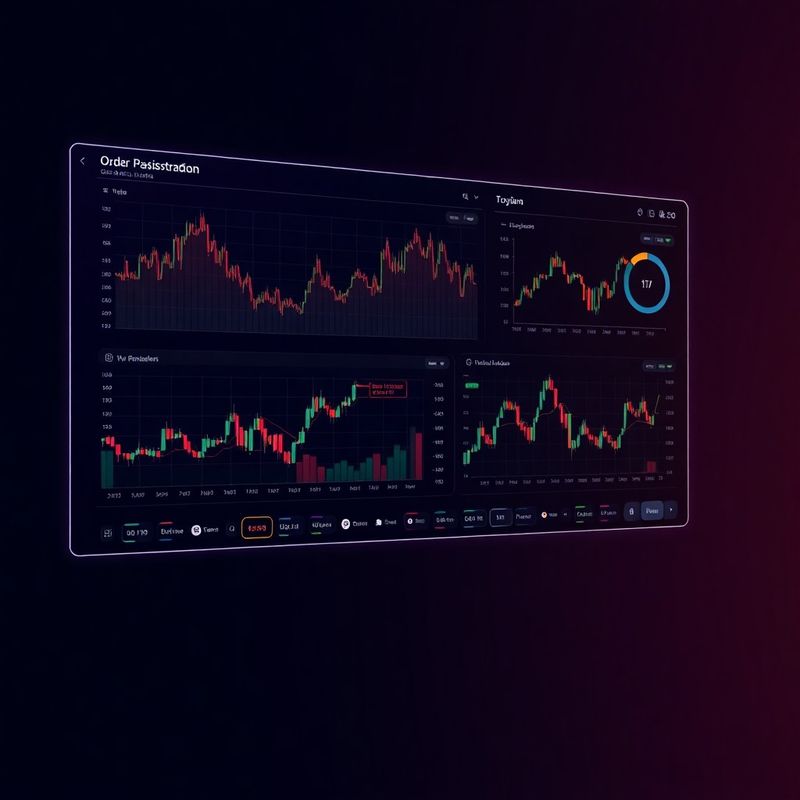
From Live Data Intake to Order Confirmation in One Pipeline
The Collective is architected as a single, continuous pipeline rather than a collection of loosely connected modules. Market data enters at the intake layer, passes through the strategy evaluation engine, is validated against the risk-control ruleset, and is dispatched to the broker API — all within the same event loop. There is no inter-process communication delay and no state synchronisation problem between a separate risk module and a separate order management system. The result is an execution path that is both faster and more predictable than what a composited stack of third-party tools can offer.
Technical Specifications at a Glance
Every figure below reflects the production environment, not a benchmarking lab with idealised network conditions.
Sub-millisecond order validation
Risk-rule evaluation completes in under 0.8 ms at the 99th percentile, measured continuously in production. This ensures that even high-frequency strategies operating on 1-second bars do not experience meaningful latency introduced by the safety layer.
10 years of tick history
The backtesting engine draws on a curated, gap-corrected tick database covering equities, FX majors, and EU-listed derivatives from 2014 to present. Corporate action adjustments and dividend normalisation are applied automatically before every simulation run.
12 broker integrations
Native connectors are maintained for 12 EU and global brokers, including IBKR, Saxo, and DEGIRO. Each connector is tested against the live broker sandbox every six hours to detect and surface API schema changes before they affect production order flow.
Real-time alerting
Configurable webhooks and email alerts fire the moment a strategy rule triggers, a risk threshold approaches 80% of its ceiling, or the system detects a data-feed anomaly. Alerts carry structured JSON payloads compatible with PagerDuty, Slack, and custom endpoints.
Session-locked risk parameters
Once a trading session is started, risk parameters are locked and cannot be changed until the session closes and a mandatory review period of at least five minutes has elapsed. This prevents impulsive in-session overrides, which account for a disproportionate share of unplanned drawdowns.
Audit-ready reporting
Every order, rejection, and parameter change is written to an immutable audit log with microsecond timestamps. Logs are exportable in formats accepted by standard MiFID II best-execution reporting templates, reducing compliance overhead for regulated entities.
“The audit log alone justified the subscription for our compliance team. We had our first MiFID II best-execution report generated directly from The Collective's export in under an hour — a process that previously took a full day of manual reconciliation.”
— Ana Kovačič, Compliance Officer, Ljubljana
Common Questions About the Terminal's Technical Architecture
If your question is not addressed here, the support team in Ljubljana typically responds within two business hours.
Can I run The Collective alongside my existing order management system?
Yes. The terminal exposes a full REST API and a WebSocket feed for real-time position and order state. Most clients run The Collective as the execution and risk layer while their existing OMS handles trade allocation and client reporting. A documented integration guide is provided during onboarding.
What happens if the connection to the broker API drops mid-session?
The terminal immediately suspends any pending order submissions and switches to a configurable fail-safe mode: either hold all positions flat or execute a full close of open positions, depending on what you have selected in your session settings. A reconnect is attempted on an exponential backoff schedule, and an alert fires as soon as connectivity is lost.
Is it possible to backtest a multi-leg options strategy?
Multi-leg strategies on EU-listed equity options and index derivatives are supported in the backtesting engine. Pricing during the simulation uses end-of-day implied volatility surfaces rather than tick-level options data, which is an important limitation to factor into your simulation expectations.
How does the terminal handle corporate actions in live trading?
For live trading, corporate action handling depends on your broker's API: adjustments such as splits and rights issues are reflected in your position data as soon as the broker pushes the updated holding. The Collective surfaces these events in the activity log immediately, but it does not independently re-price open positions — that responsibility remains with the broker.
Specifications Reviewed — What Would You Like to Do Next?
Review pricing tiers or reach the support team directly to discuss a custom integration requirement.